
Gen AI Hub researchers unveil DiffRatio for efficient one-step image generation
Hub researchers have developed a method for training ultra-fast image generation models that produce higher-quality images in a single step, while reducing GPU memory usage during training by up to 50%.
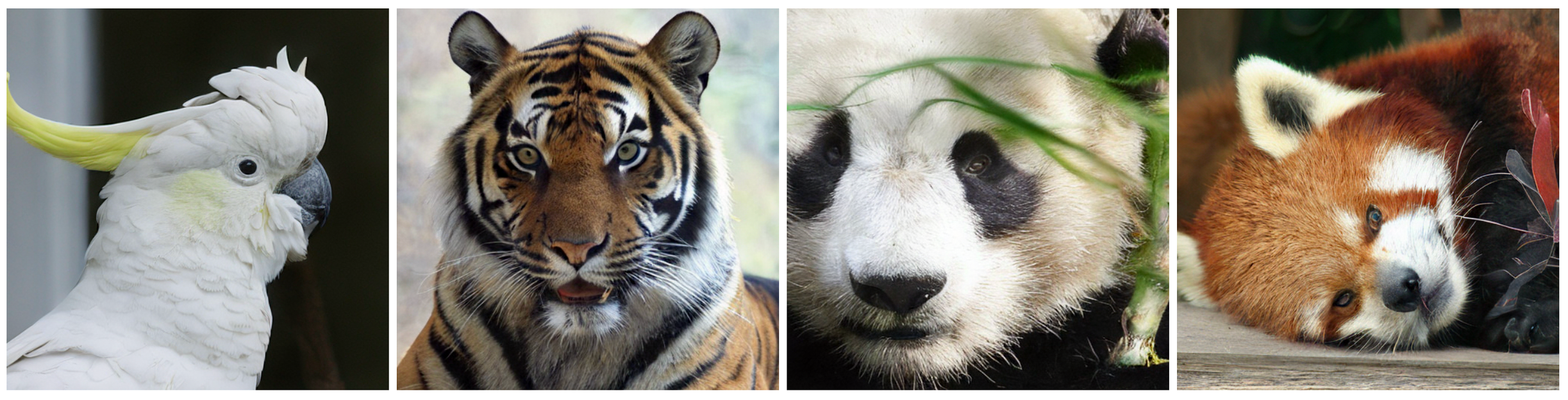
Images generated by DiffRatio on ImageNet 512 × 512 with a single step (FID =1.41)
The new framework, called DiffRatio, enables state-of-the-art one-step image generation without requiring teacher supervision, significantly simplifying the training process and improving efficiency. The paper is available on arXiv.
Diffusion models are currently the most widely used approach for generating high-quality images and power many of today’s leading image generation systems. However, they typically require hundreds or even thousands of steps to generate a single image, making them slow and computationally expensive.
To address this, researchers have explored one-step distillation, a technique in which a large, slow teacher model is first trained and then its knowledge is transferred to a much faster student model that can generate an image in a single step. While promising, this approach often passes errors from the teacher to the student and introduces additional errors during training, which can noticeably reduce image quality.
DiffRatio overcomes this problem by removing the need for a teacher–student setup. Instead of distilling knowledge from a large, imperfect teacher model into a smaller student model, DiffRatio directly learns how the generated images should change to better match real data. This results in a simpler and more stable training process that produces higher-quality one-step image generation, while also reducing computational cost and GPU memory usage.
The DiffRatio framework was developed by an international research team from University College London (UCL), the University of Cambridge, Imperial College London, the Max Planck Institute for Intelligent Systems (Tübingen), and Bosch. The core team includes Mingtian Zhang, José Miguel Hernández-Lobato, and David Barber, all affiliated with the Gen AI Hub.
Mingtian Zhang, a postdoctoral researcher at the Gen AI Hub based at UCL’s Centre for Artificial Intelligence, said:
“This framework achieves state-of-the-art image quality for one-step diffusion models while requiring significantly less GPU memory during training. Its potential impact is substantial, and we expect large generative AI companies to adopt this approach in the near future.”
DiffRatio: Training One-Step Diffusion Models Without Teacher Supervision can be viewed on Arxiv.com
